

 See My Latest Article on HelloNation
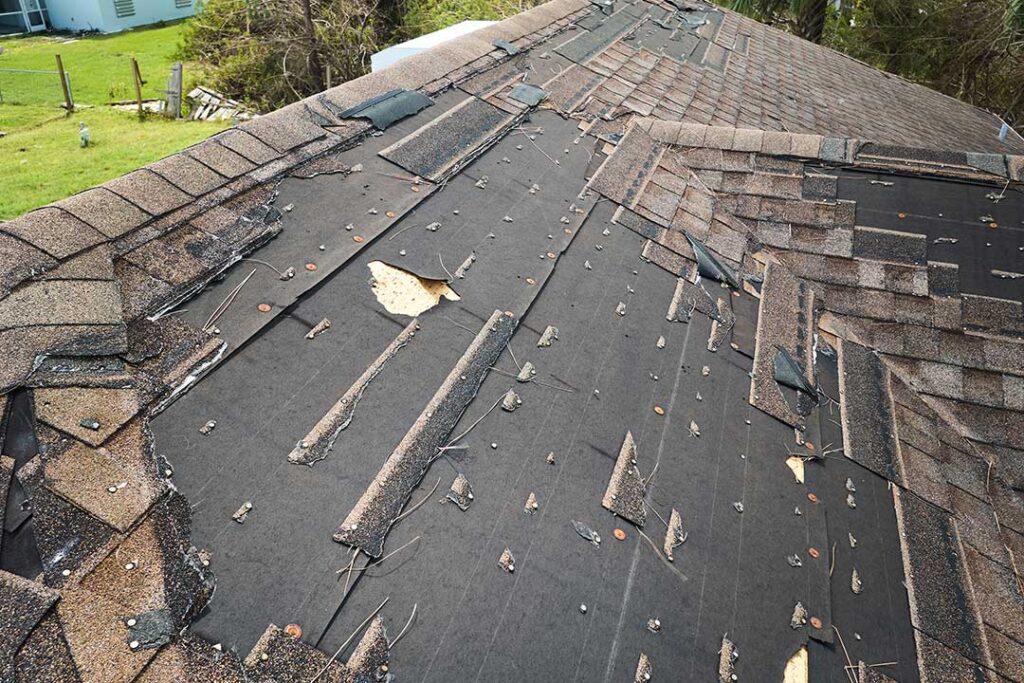
Rainwater is one of the main forces that gradually wears down a roof. Gutters and downspouts help control where that water goes, reducing the amount that collects along roof edges, soaks exterior walls, or concentrates beside the foundation.
For households in Sarasota, this matters because the local climate includes intense seasonal rainfall, frequent thunderstorms, tropical weather, and long periods of heat and humidity. A gutter system cannot prevent every roof problem, but it can reduce several common causes of moisture damage.
How do gutters protect a roof?
Gutters collect runoff from sloped roof surfaces and move it toward downspouts. Without that controlled path, water can spill over the roof edge in sheets, repeatedly wetting the fascia, soffit, siding, trim, and foundation area.
Gutters support roof health in several ways:
- They reduce water washing over roof edges.
- They limit moisture exposure around fascia boards and soffits.
- They help prevent soil erosion near exterior walls.
- They move water away from wall penetrations, doors, windows, and other vulnerable areas.
- They reduce the chance that runoff will collect beneath the lower edge of the roofing system.
The roof covering itself is designed to shed water, but the edge of the roof is only one part of the drainage system. If water repeatedly backs up because of clogged or poorly positioned gutters, it can reach materials that were not intended to remain wet for long periods.
Can clogged gutters damage a roof?
Yes. A clogged gutter can contribute to roof damage, especially during heavy rain. Leaves, pine needles, roof granules, and other debris can block normal flow. Water may then overflow over the front of the gutter or back up beneath the roof edge.
Possible effects include:
- Saturated fascia and soffit materials
- Peeling paint or staining beneath the roof edge
- Rot in wood trim
- Water entering through poorly protected roof-edge details
- Loose or sagging gutters that pull on the fascia
- Mosquito breeding in standing water
- Erosion and pooling near the foundation
A blockage does not always create an immediate interior leak. Moisture damage may develop slowly, with early signs appearing as soft wood, dark staining, mildew-like growth, or recurring paint failure.
Gutters filled with debris can also become heavy. During a major rain event, the added weight of water and wet organic material may place stress on hangers, fasteners, and fascia boards.
Why is gutter maintenance especially relevant in Sarasota?
The community’s rainy season can bring repeated downpours rather than only light, evenly distributed rain. Tropical weather can also deposit leaves, small branches, and other debris across roofs and into drainage systems.
Homes surrounded by mature trees may need more frequent attention than homes with open space around them. Roofs near palms, oaks, pines, or dense landscaping can collect material that is carried into gutters during wind and thunderstorms.
Heat and humidity create additional challenges. Organic debris stays damp longer, which can speed decomposition and encourage biological growth. Salt-laden air in coastal areas may also contribute to corrosion of some gutter materials and fasteners, particularly when protective coatings have deteriorated.
What gutter problems should homeowners look for?
A visual inspection from the ground can identify many warning signs. Look for:
- Gutters that sag or pull away from the roofline
- Water spilling over during rain
- Rust spots, holes, or separated seams
- Downspouts that discharge directly beside the foundation
- Stains below the gutter line
- Peeling or blistered paint on fascia boards
- Plants growing inside the gutter
- Pools of water or eroded soil beneath downspouts
- Roof-edge areas that remain dark or damp after surrounding surfaces dry
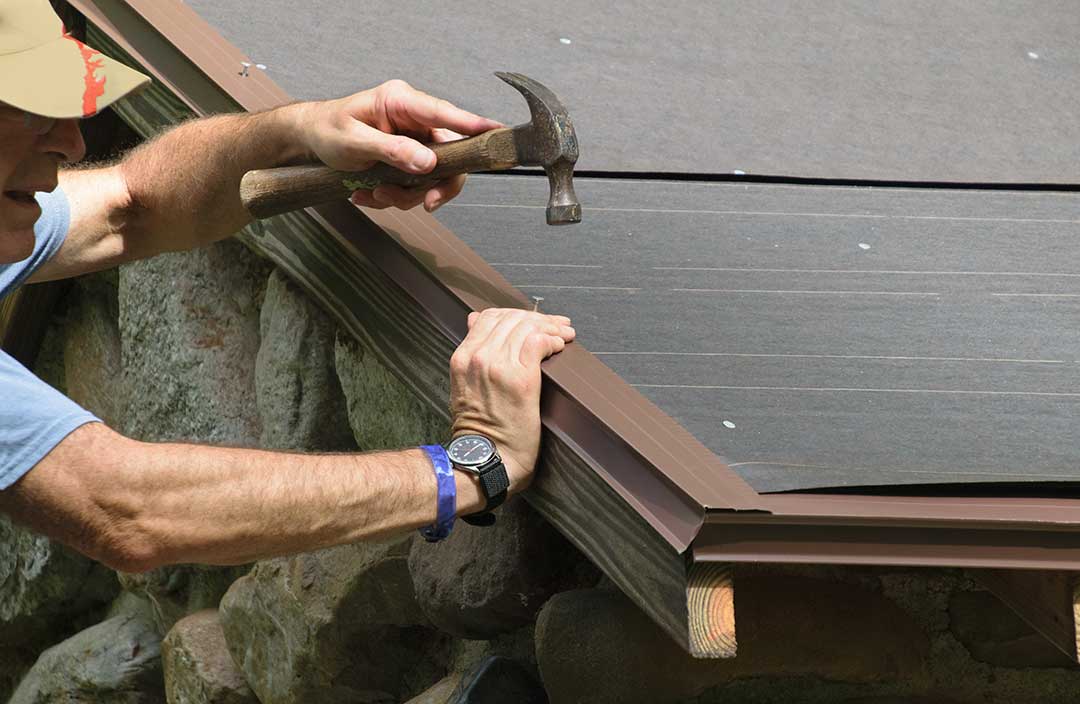
Water marks on exterior walls do not always prove that the roof covering is leaking. The cause could be a blocked gutter, a failed flashing detail, a damaged soffit, or water entering at a window or wall joint. Finding the general area is useful, but tracing the exact path of water may require closer inspection.
Do all homes need gutters?
No. Gutter requirements depend on roof design, drainage patterns, site conditions, and how water leaves the property.
Some buildings are designed for water to drain through roof edges, scuppers, internal drains, or other systems. Low-slope and flat roofs may use a combination of drains and scuppers rather than conventional gutters. In those cases, keeping drains, strainers, and discharge points clear is just as important as maintaining a sloped-roof gutter system.
A home may also have gutters on some roof sections but not others. The key question is not whether every roof edge has a gutter. It is whether rainwater is being directed safely away from vulnerable building materials and the foundation.
Where should downspouts discharge water?
Downspouts should release water far enough away from the structure to prevent repeated pooling beside the foundation. The exact arrangement depends on the property’s grading, soil, nearby paving, drainage features, and local requirements.
A downspout that ends beside a wall can create problems even if the gutters themselves are clean. Water may collect near the slab, crawl space, basement area, or low points around the home. In heavy rain, a short discharge path can also cause erosion that eventually changes the slope of the soil and directs more water toward the structure.
Extensions, splash blocks, underground drainage, or other solutions may be appropriate in different settings. These should not send runoff onto a neighboring property or create a trip hazard.
Do gutter guards eliminate maintenance?
No. Gutter guards can reduce the amount of debris entering a gutter, but they do not make the drainage system maintenance-free. Small leaves, seeds, roof granules, algae, and windblown material can still collect on or beneath the guard.
Guards can also become blocked across their surface. Some designs may perform differently during intense rainfall, especially when debris covers a large portion of the screen or mesh.
A gutter system with guards still needs periodic observation. Check whether water flows freely during rain, whether debris is accumulating, and whether the guards remain secure after storms.
How often should gutters be checked?
There is no single schedule for every property. Homes with heavy tree cover may need inspections several times a year, while homes with fewer nearby trees may need less frequent attention.
Useful times to check include:
- Before the wetter part of the year
- After strong thunderstorms or tropical weather
- When visible overflow occurs
- After roof work or exterior remodeling
- When new staining or soil erosion appears
Ladder work becomes hazardous on wet surfaces, uneven ground, or multi-story homes. If gutters are difficult to reach, if the roof edge is unstable, or if electrical lines are nearby, the inspection should not be treated as a routine do-it-yourself task.
What is the connection between gutters and roof inspections?
Gutters should be considered part of the roof drainage system, not a separate decoration attached to the house. A roof inspection should include the edges, fascia, soffits, flashing, valleys, downspouts, and areas where water leaves the property.
The most useful evaluation asks two questions: Is water leaving the roof properly, and is it being discharged safely after it reaches the ground?
A sound roof with poor drainage can still develop moisture-related problems. Likewise, clean gutters cannot correct damaged flashing, missing shingles, deteriorated sealants, inadequate slope, or structural movement. Good roof health depends on the entire water-management system working together.